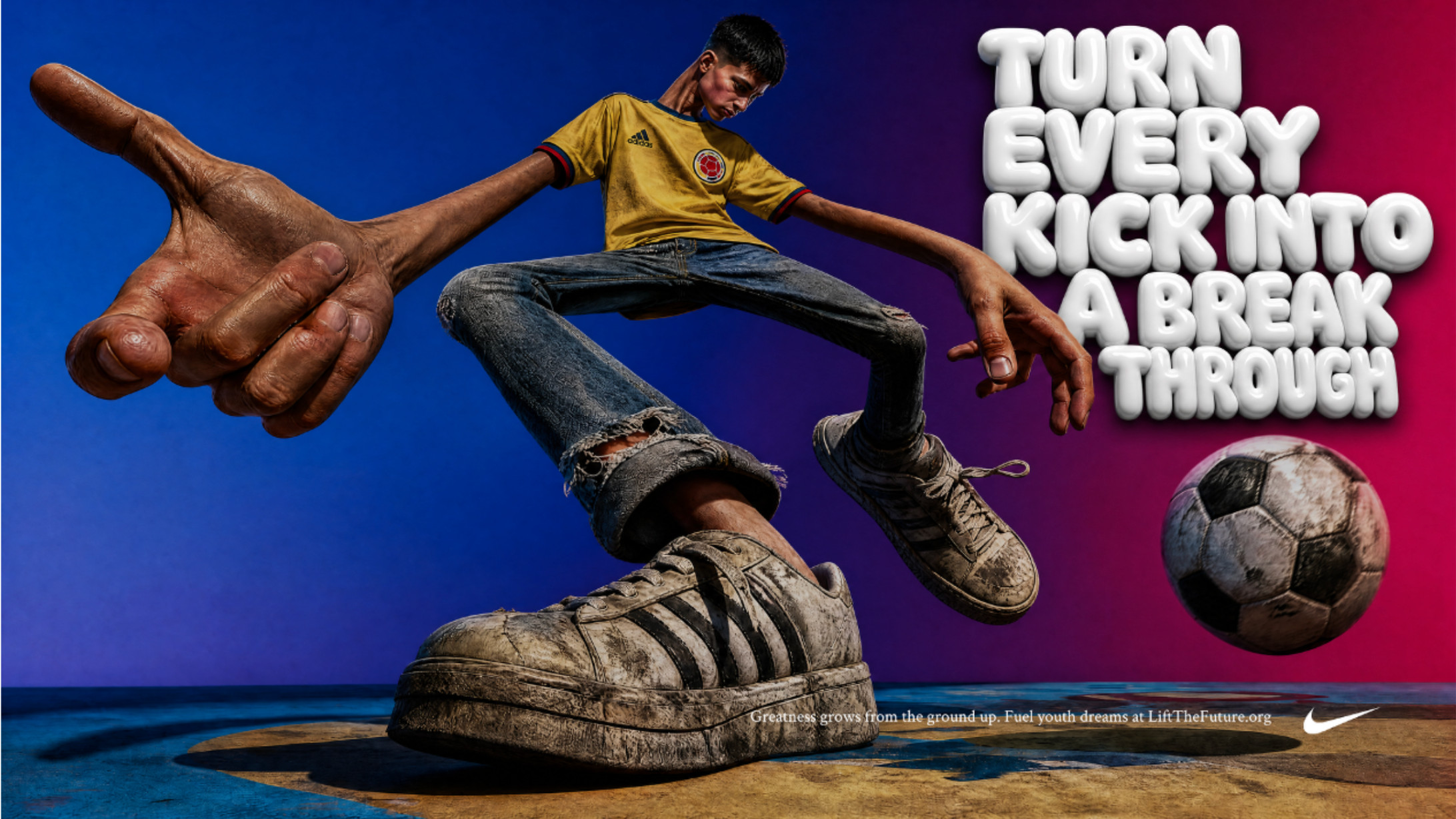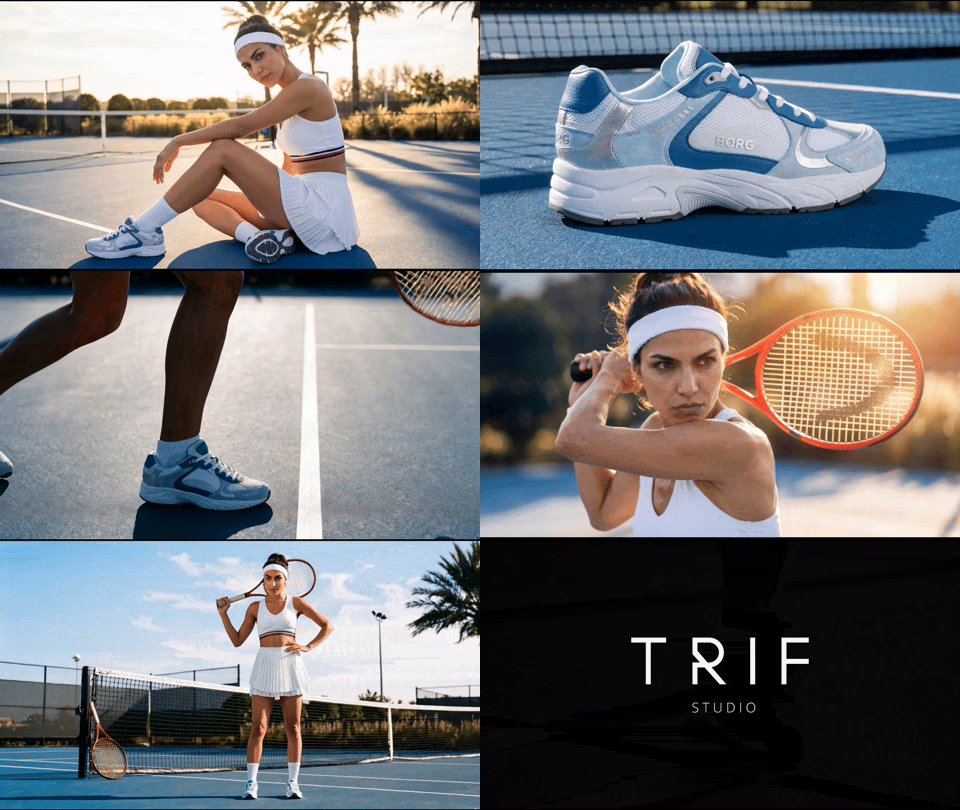

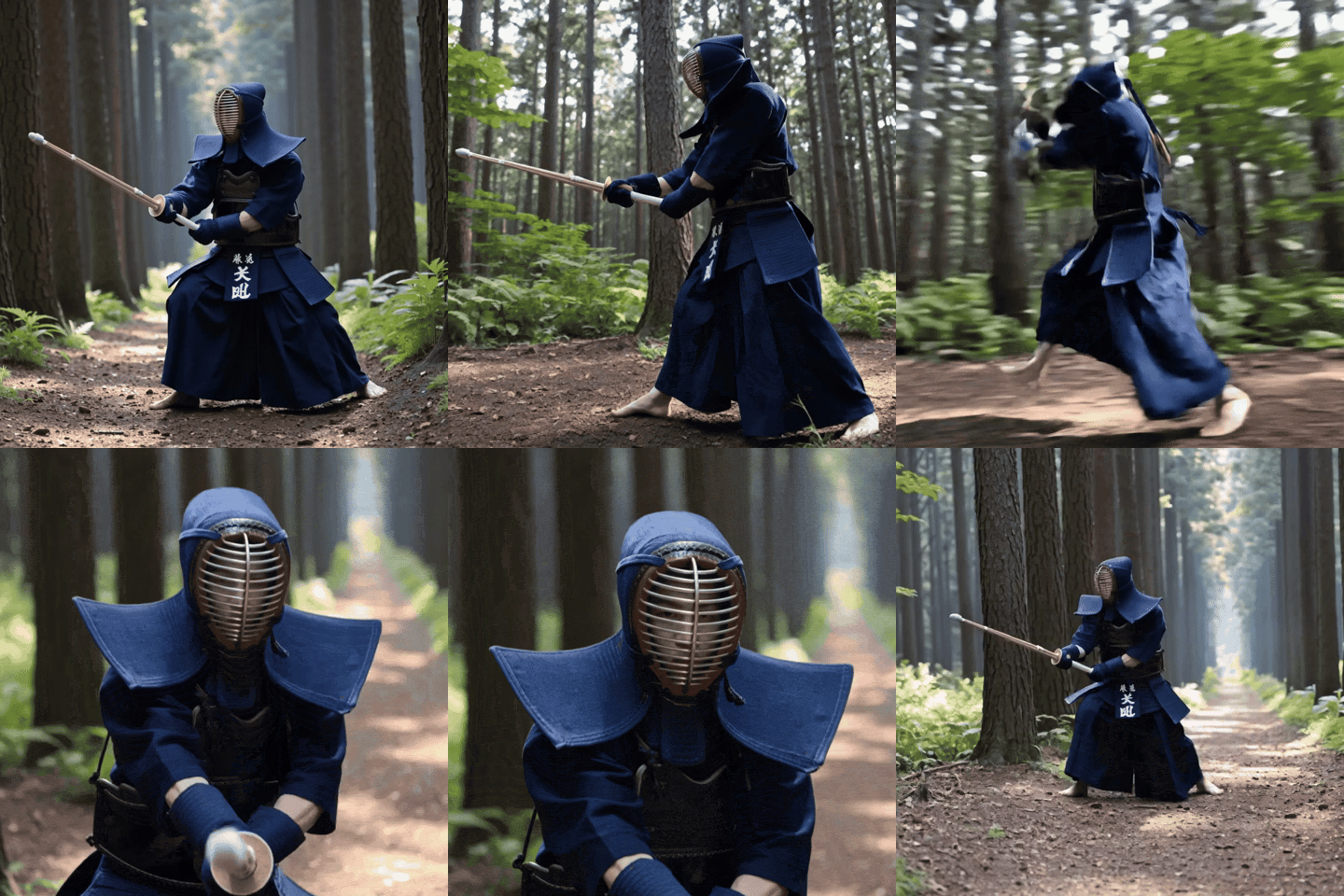
As AI image generation continues to improve, a question remains: when is a general-purpose model enough, and when does a specialist model still make sense?
Models that once struggled with anatomy, hands, and object consistency can now produce images that would have been difficult to distinguish from professional work only a short time ago.
As these systems continue to improve, many creators have begun to ask whether custom training methods like LoRAs are still worth the effort.
That question became the starting point for Lighthouse student João Lourenço.
As a Kendo practitioner and enthusiast of Japanese martial arts, João noticed a recurring problem across multiple image generation models. While many systems could produce images that resembled Kendo armor, very few could accurately recreate the details that make a Kendo Bogu recognizable to someone who actually practices the sport.
Rather than accepting the limitation, João decided to investigate it directly by training a LoRA dedicated specifically to Kendo armor and documenting the entire process along the way.
The project became more than a training exercise. It became a useful case study in dataset design, model selection, iteration, and the practical trade-offs between specialist models and increasingly capable general-purpose systems.
To answer that question, João approached the project as a structured experiment. What follows are the five stages that took the project from dataset creation and model training to testing whether a specialist LoRA still has a place in modern AI workflows.
1. Start by Understanding the Subject
Before collecting images or configuring training parameters, João focused on understanding exactly what needed to be taught to the model.
A Kendo Bogu is not a single object. It is a collection of distinct components that work together as a complete armor system. Each component has its own shape, purpose, and terminology.
The armor consists of:
Men (helmet)
Kote (gauntlets)
Do (chest protector)
Tare (waist and thigh protector)
This immediately influenced how the dataset would need to be constructed. The goal was not simply to gather photographs of Kendo equipment. The captions themselves needed to reinforce the names of each component in both English and Japanese while also describing their physical characteristics.
In other words, the model needed to learn more than appearance. It needed to learn structure.
The dataset needed to emphasize the name of each part, both in Japanese and English, as well as its form and details.
— João
2. Build the Dataset
With the subject defined, João moved into dataset creation.
The initial dataset contained approximately 110 images gathered across multiple perspectives and levels of detail. The objective was to provide enough visual information for the model to understand the subtle differences between each component while maintaining consistency throughout the training process.
Captions were generated using a ComfyUI workflow developed with support from Lighthouse mentor Dennis Schoneberg. Once processed, the dataset was prepared for ingestion into Ostris, the training software João used throughout the project.
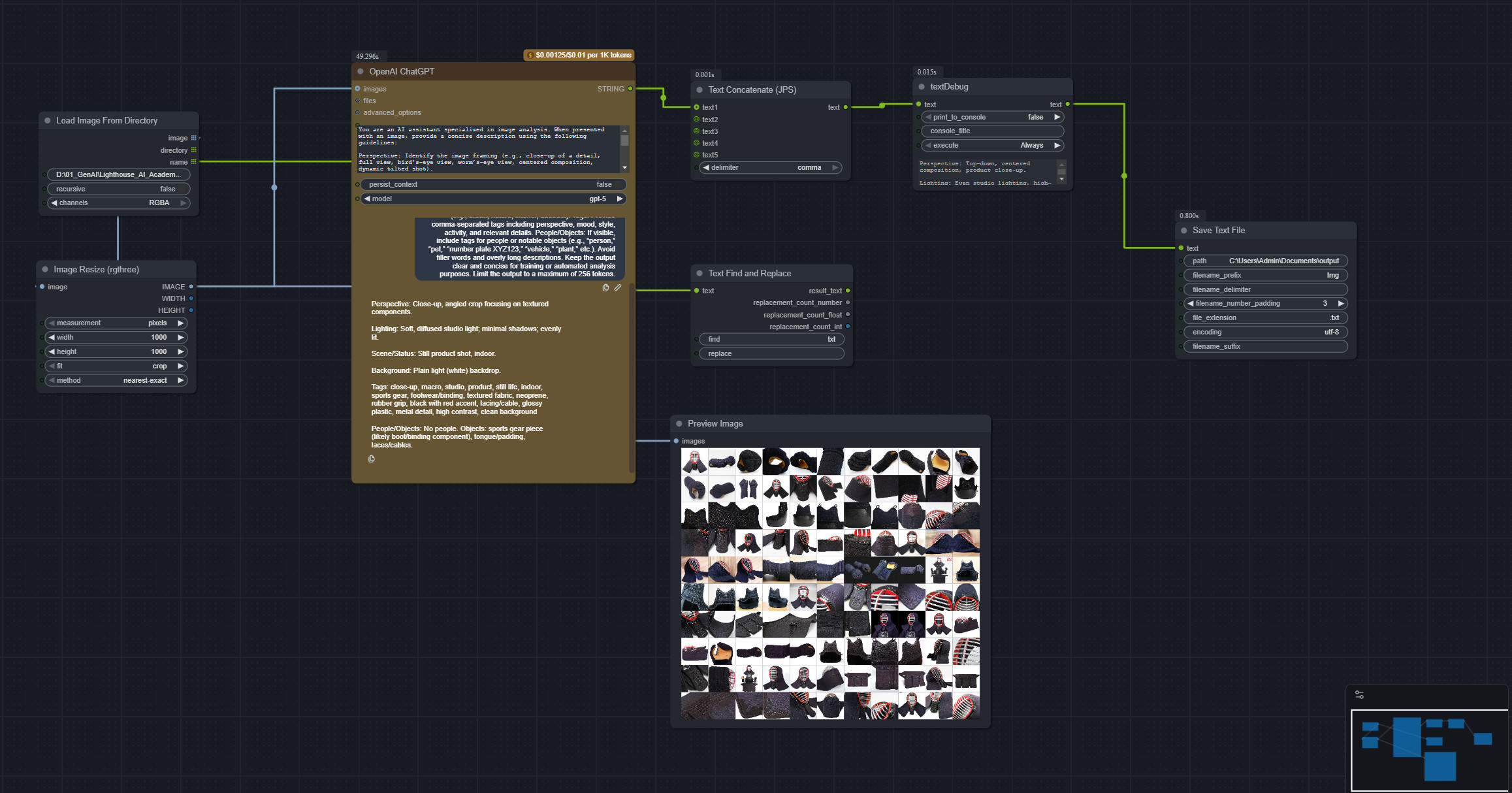
At this stage, the project appeared ready for training.
The dataset contained a variety of angles, close-ups, and product-style images. The captions were complete, and the workflow was functioning as intended.
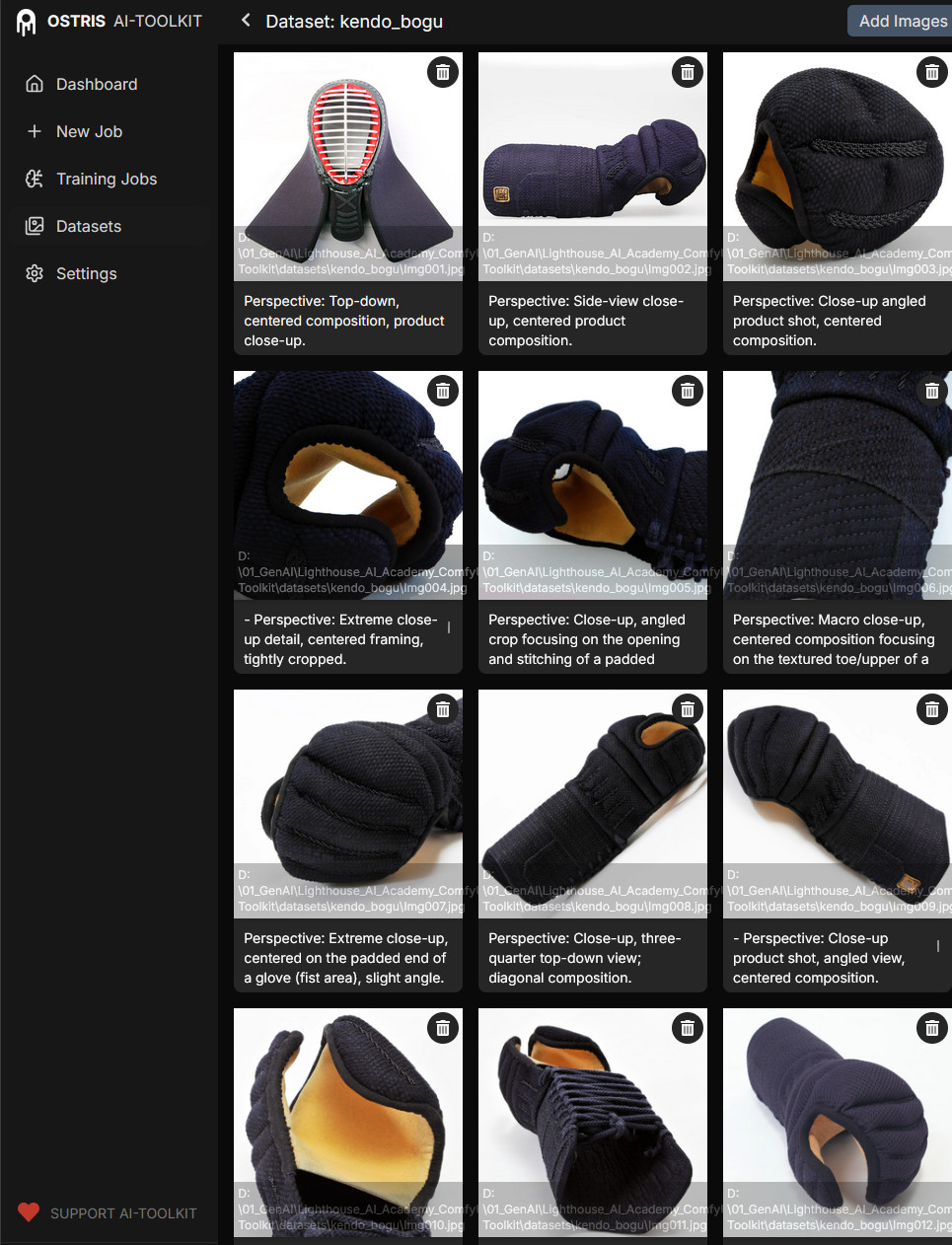
Then it was time for the first training run.
3. Learn From and Embrace Failure
The initial results were disappointing.
Rather than producing accurate representations of Kendo armor, the model generated outputs that exposed several weaknesses in the overall approach. Looking back, João describes this stage as one of the most valuable parts of the project because it revealed problems that would have been difficult to identify otherwise.
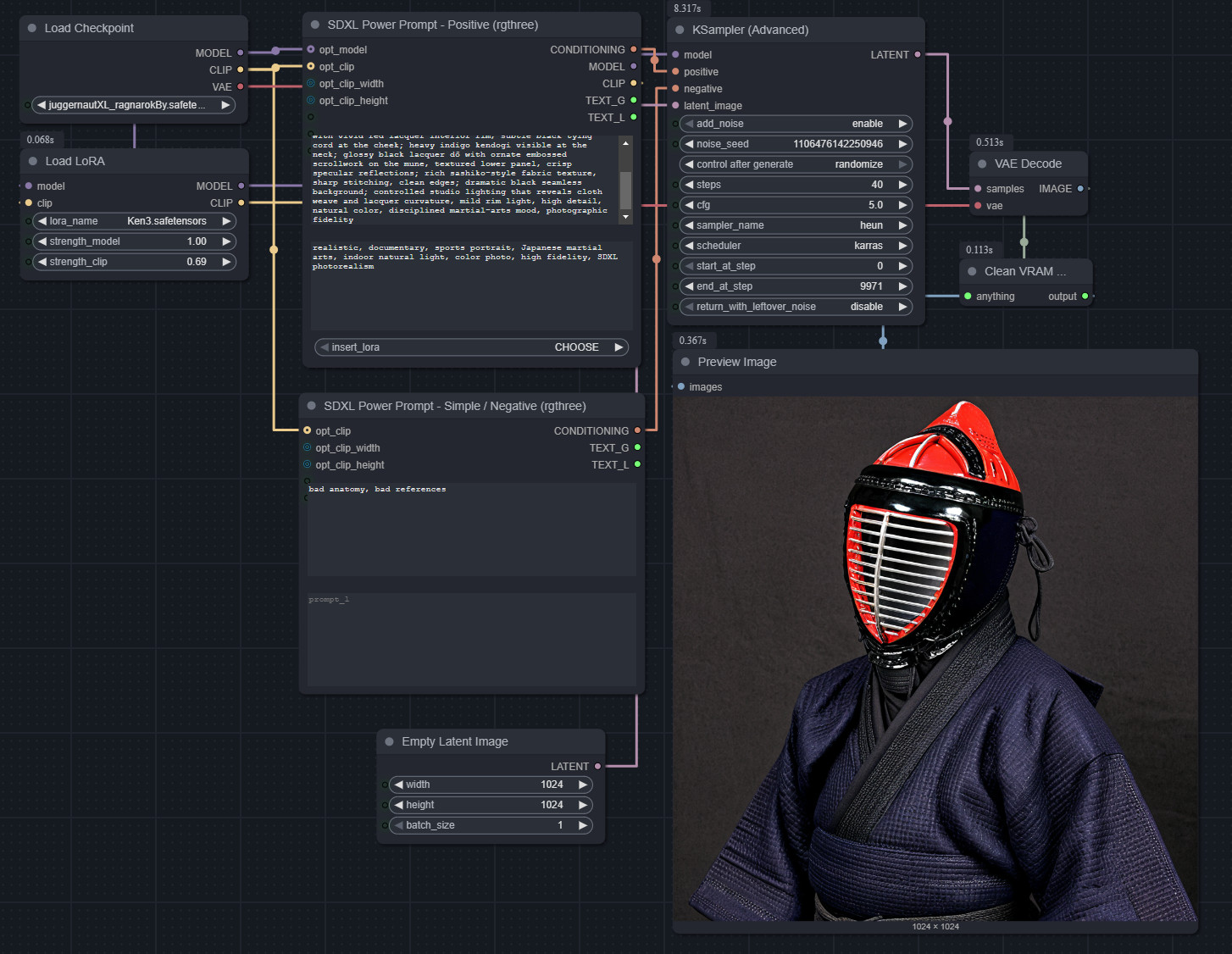
The results humbled me quickly. Three things had gone wrong simultaneously.
— Joao
After troubleshooting and feedback sessions, three primary issues emerged.
The Model
The first challenge involved the base model itself.
The original training experiments were conducted using SDXL. While João appreciated the visual quality achievable through SDXL Ragnarok, the project suggested that a different architecture would be better suited to the task.
As a result, later training runs shifted to FLUX.1.
The Dataset
The second issue involved context.
The original dataset contained detailed images of individual armor components, but it lacked enough examples of those components being worn by actual practitioners.
Then João started asking the right questions:
How was the model supposed to know how each piece fits on the human body if no action images, with actual humans wearing the full set, are provided?
This became one of the most important lessons in the project. The model did not simply need more images, but images that explained how the armor functioned as a complete system.
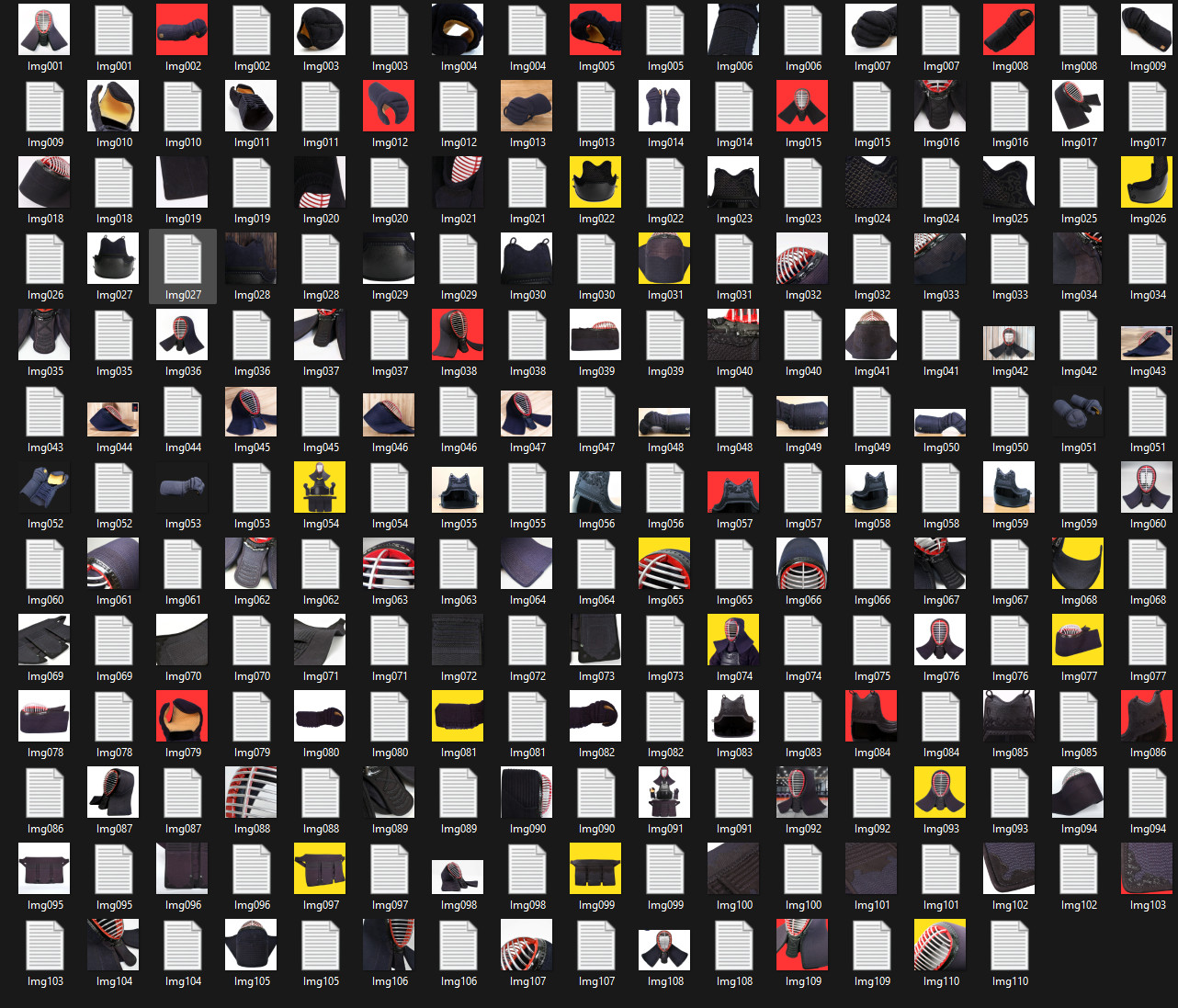
The solution involved introducing action photography alongside the existing product imagery. He also discovered that replacing the uniform white backgrounds with stronger colors helped improve the quality of the training data.
The Training Parameters
The final issue was configuration.
The learning rate was too high and the total number of training steps was too low. Together, these settings limited the model's ability to learn the level of detail João was aiming for.
What initially appeared to be a training failure ultimately became a roadmap for the next iteration.
4. Retrain, Refine, Regenerate
Armed with a better understanding of the problems, João rebuilt the workflow.
The revised dataset expanded to more than 200 images and introduced significantly more contextual information through action photographs. The training process also moved to FLUX.1 and adopted a new configuration designed to prioritize detail retention.
The final setup included:
FLUX.1 as the base model
Float8 quantization
Linear Rank: 64
Balanced timestep bias
4,000 training steps
Learning rate: 0.000075
Exponential Moving Average enabled
Native FLUX resolutions of 768 and 1024
The improvements were substantial.
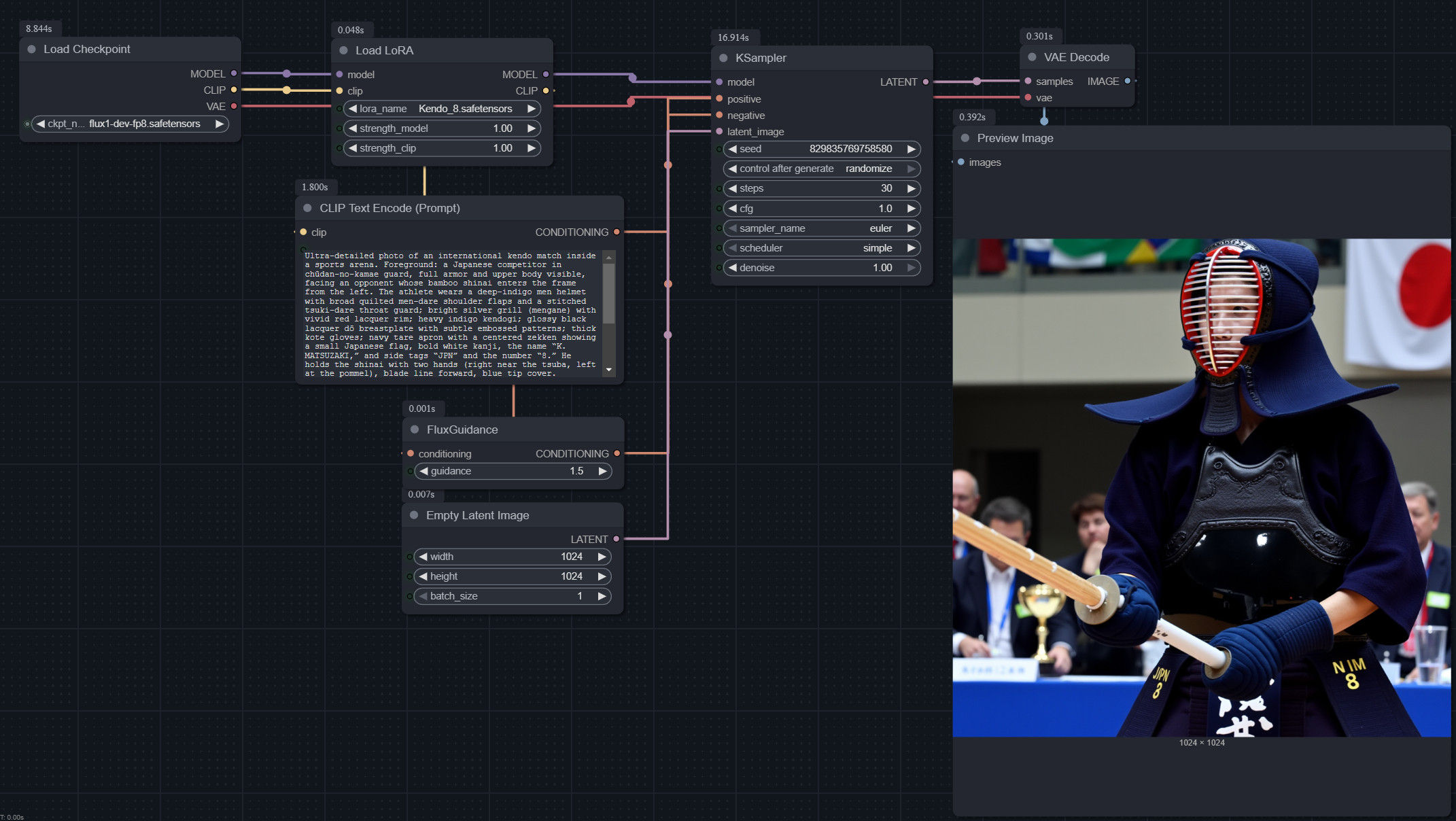
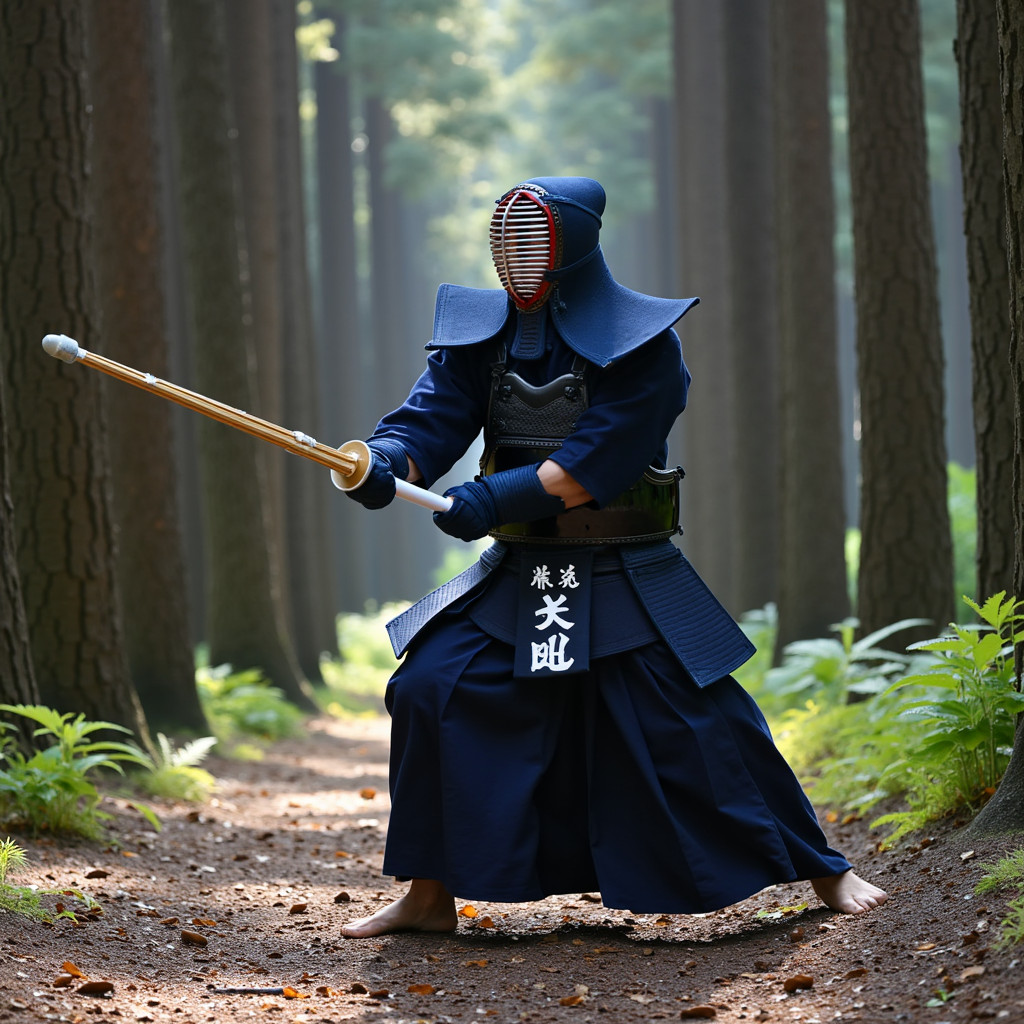
With each new training attempt, the outputs began to resemble actual Kendo armor with a much higher degree of accuracy. Details that had previously been inconsistent became more reliable, and the model developed a stronger understanding of how the individual components worked together.
One particularly interesting outcome involved elements that were never explicitly trained.
As João notes:
The training did not target the clothing under the armor, nor the bamboo sword. These elements were context-driven into the LoRA.
After ten training attempts, João had produced the most accurate AI-generated Kendo Bogu he had encountered up to that point.
5. Testing the LoRA Against Newer Models
Six months after completing the project, João revisited the experiment.
The AI landscape had changed considerably during that time. New image generation models had been released, editing workflows had improved, and many creators had begun questioning whether specialist training was still necessary.
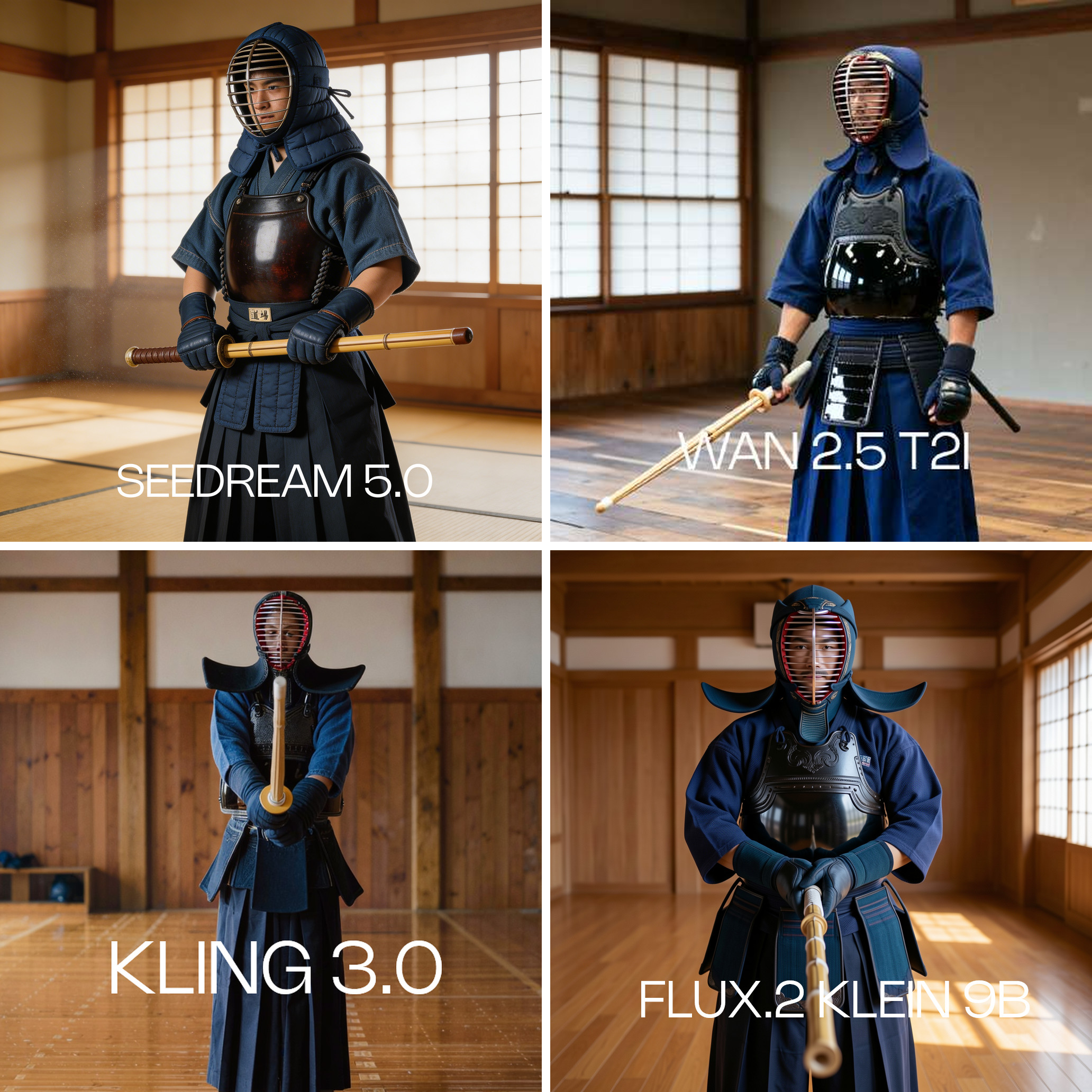
To test the current state of the technology, João compared the LoRA against several newer systems.
Every prompt was adapted with the assistance of an LLM to ensure each model received instructions optimized for its strengths. The goal was not to create a perfect benchmark, but to give each system the best opportunity to succeed.
The results were impressive.
Flux.2 Klein 9B and Kling 3.0 both produced noticeably stronger outputs than previous generations of models, yet certain challenges remained.
The Kote, or gauntlets, continued to expose inaccuracies across multiple systems. Even when combining Flux.2 Klein 9B with Nano Banana 2, the results still fell short of complete accuracy.
For many viewers, these differences would likely go unnoticed, but for someone familiar with Kendo equipment like João, they remained obvious.
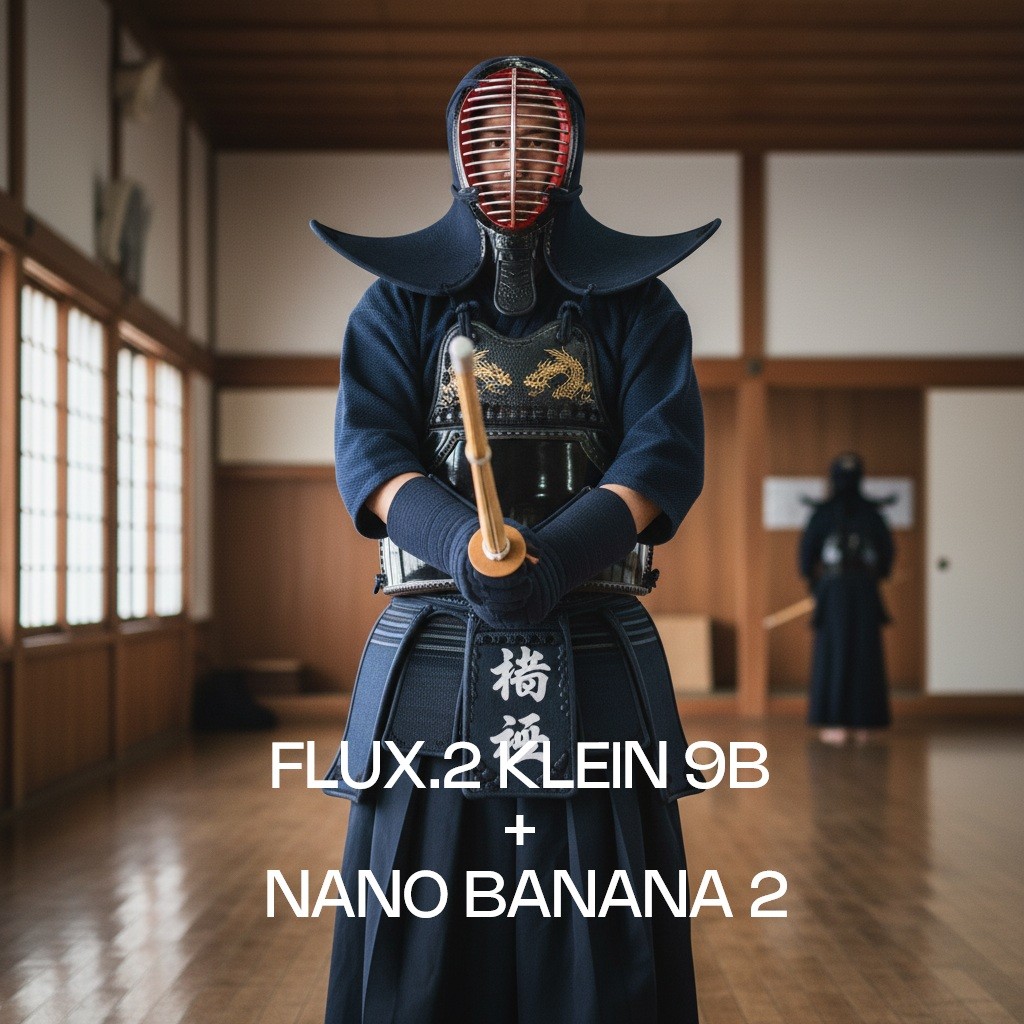
This distinction became one of the most interesting outcomes of the experiment. The closer models get to reality, the more valuable domain expertise becomes when evaluating results.
Why It Matters
It would be easy to frame this project as a debate about whether LoRAs are becoming obsolete, but João's experience suggests a more nuanced answer.
General-purpose models are improving rapidly and continue to close the gap on many specialist tasks. At the same time, professional production environments often care about more than a single successful image.
They care about consistency, repeatability, and control.
João notes that many projects requiring an object-specific LoRA share two characteristics: the need for accurate reproduction and the need to generate that object repeatedly across a large number of outputs.
In those situations, a dedicated model may still provide advantages over workflows that require multiple reference images and extensive manual intervention at every stage.
Control, repeatability, and cost efficiency win over flexibility every time.
— João
Learning From João's Workflow
At Lighthouse AI Academy, we see projects like João's as valuable because they reveal how creative systems are built from the ground up.
This experiment demonstrates what happens when:
The subject matter is studied before the dataset is assembled.
Failure is used to improve the workflow rather than abandon it.
Evaluation is guided by domain expertise instead of first impressions.
Context is treated as part of the training data rather than an afterthought.
Specialist models are compared against real-world production requirements.
Most importantly, it demonstrates that training remains a practical skill when accuracy, consistency, and repeatability are required.
From Experiment to Production Thinking
João's Kendo LoRA began as an attempt to solve a specific problem.
What emerged was a broader lesson about the relationship between specialist systems and increasingly capable general-purpose models.
The project showed that modern models can achieve impressive results with the right prompting and editing workflows. It also showed that there are still situations where dedicated training offers meaningful advantages, particularly when a subject requires a high degree of accuracy and must be reproduced consistently over time.
It’s possible that the future may belong to more capable generalist models.
But for many professional workflows, specialization still has a role to play.
And that is precisely what João's experiment set out to test.
Learn with Lighthouse: Build Systems That Solve Real-World Problems
At Lighthouse AI Academy, we encourage students to move beyond simply using tools and toward understanding how creative systems are built.
Projects like João's demonstrate how experimentation, iteration, and structured problem-solving can turn a technical challenge into a valuable workflow.
Because the goal is not simply to generate images.
The goal is to build processes that work reliably when real creative and commercial demands are placed on them.
This is a case in point of why we believe in:
USING AI TO ENHANCE, NOT REPLACE.
View our courses now and build your own systems with purpose.
Any questions or comments about the article?
Message us and let us know your thoughts!